Will Parrinello has been making award-winning documentaries for 39 years. His filmography includes Movies Around The World, a short for the 89th Academy Awards, seen by 86 million people in 250 countries, Mustang - Journey of Transformation; Emile Norman – By His Own Design; Dreaming of Tibet; Little Italy, Kerouac; and the multiple Emmy Award-winning series The New Environmentalists. Will co-produced Summer ’82 – When Zappa Came to Sicily; Sea Change; Yen For Baseball and Sumo Basho. He was director of photography on the Academy Award nominated feature documentary Tell The Truth & Run – George Seldes & the American Press, In The Light of Reverence and Standing On Sacred Ground.

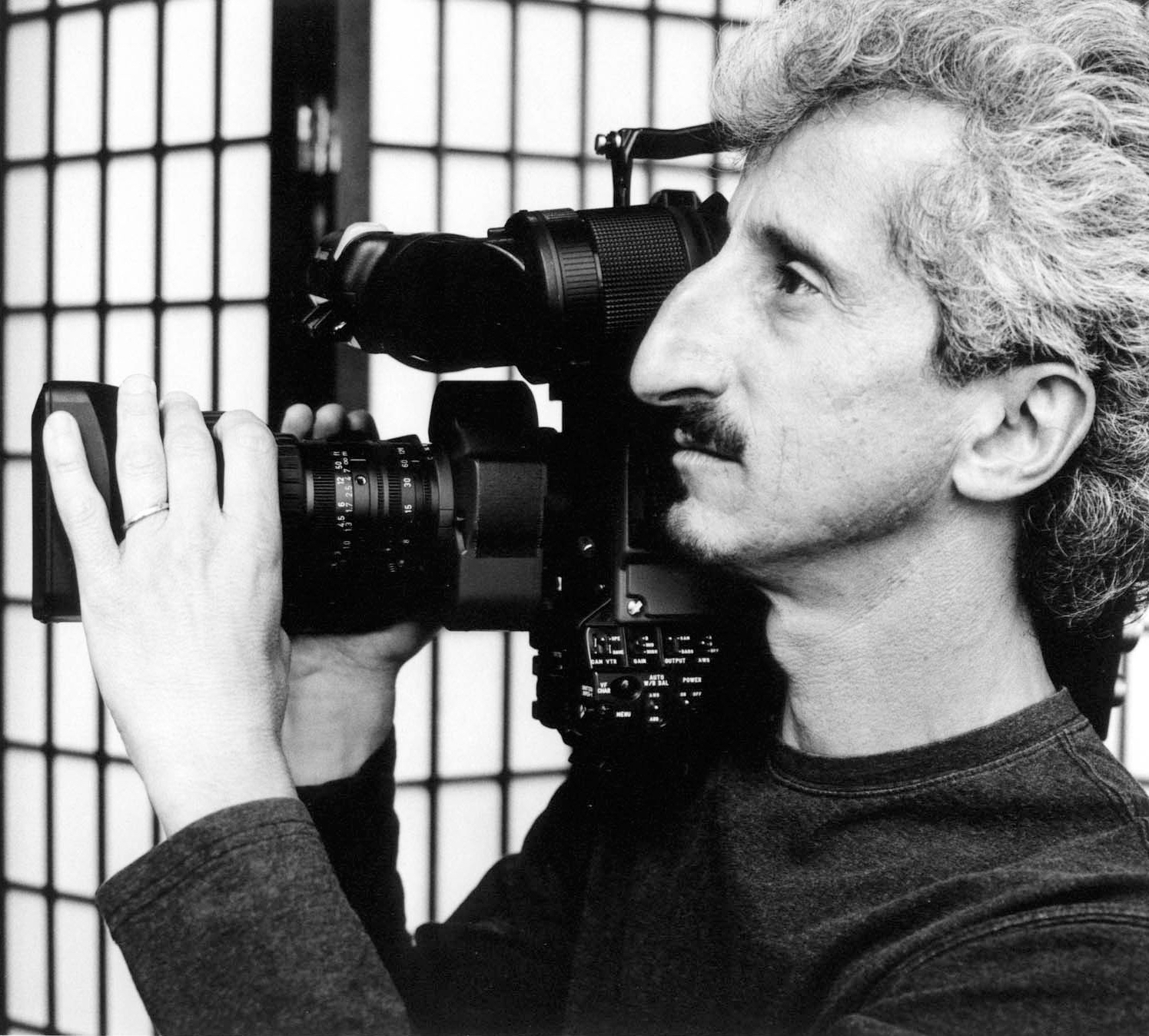
Will Parrinello
Historic Documentary • 2009 • 28m
Sunlight breaks through clouds over a silhouetted mountain range, creating dramatic crepuscular rays before shifting to a clear view of snow-capped peaks adorned with prayer flags.
Monks perform traditional Cham dances in a monastery courtyard before a large assembly, set against the backdrop of the Himalayan mountains.
Monks in traditional ceremonial attire perform ritual dances and music at a Himalayan monastery while a speaker recounts the significance of the cultural gathering.
Residents of a remote Himalayan village gather near a monastery as a local man reflects on regional life and traditions. The scenery highlights the stark, arid mountain terrain characteristic of the Mustang region.
An elderly man describes traditions as monks perform a ritual within a remote Himalayan monastery courtyard. The scene captures the intersection of personal narrative and monastic life in a mountainous landscape.
The 14th Dalai Lama discusses spiritual principles while interspersed shots depict Tibetan monks in traditional surroundings and remote Himalayan historical sites.
A traveler walks alongside a horse through a remote Himalayan village, transitioning into sweeping views of the rugged Mustang landscape.
Dramatic mountain peaks transition to a remote monastery village where a local herdsman guides his flock of goats through stone-walled paths.
Art conservator Luigi Fieni discusses his work while scenes of life in a rural Himalayan village and the surrounding arid mountain landscape are shown.
The presentation provides a geographical context for the Mustang region of Nepal, transitioning from a landscape perspective to a map-based analysis before introducing Prince Jigme Singi Palbar Bista.
Prince Jigme Singi Palbar Bista introduces the cultural and historical significance of the Mustang region, illustrated by traditional Tibetan religious art and expansive Himalayan landscapes.
Richard Blum discusses the cultural and geographical significance of the Mustang region in the Himalayas. The segment highlights the unique topography and historic settlements through interviews and aerial landscape cinematography.
Buddhist monks perform a ceremonial ritual inside a dimly lit monastery, featuring rhythmic cymbal playing and meditative focus. The sequence transitions to an interview with Khempo Kungo Tenzing regarding the spiritual practice.
Khempo Kungo Tenzing, abbot of Choedhe Monastery, speaks about traditional religious iconography, transitioning into detailed close-ups of an intricate, red-hued thangka painting.
The 14th Dalai Lama discusses the role of Buddhist traditions in achieving lasting inner peace. The narrative highlights spiritual practice against the backdrop of traditional Tibetan religious art.
Tsewang Jhonden Bista of the Lo Gyalpo Jigme Foundation discusses cultural preservation efforts set against the backdrop of the Mustang region in the Himalayas. The segment highlights traditional landscapes and rural life, featuring horseback travel and historical imagery.
The footage contrasts archival scenes of military conflict and prisoners in Tibet with a modern-day journey by horse past restricted areas and an interview regarding the region's historical situation.
A narrator discusses regional heritage while showcasing aerial views of historic stupas set against rugged mountain terrain and local workers carrying fuel supplies. The footage highlights the intersection of ancient architectural traditions and daily life in high-altitude environments.
A scholar discusses the artistic significance of ancient religious murals while documenting the preserved frescoes within a traditional Tibetan monastery setting.
A researcher discusses the historical significance of Buddhist frescoes before the Dalai Lama elaborates on the evolution of large monastic institutions.
The 14th Dalai Lama discusses the fragility of Buddhist tradition and the impact of decline, illustrated by scenes of historical Tibetan structures and daily life.
Buddhist monks in traditional red robes walk along stone walls in a remote, mountainous region. The footage transitions to panoramic views of vast, rugged valleys and snow-capped Himalayan peaks.
A man engages with local residents in a high-altitude Himalayan setting before reflecting on his experiences inside a traditional room. The group later visits a sacred monastery site to continue their journey.
King Jigme Palbar Bista speaks in an interview, set against a backdrop of traditional Himalayan architecture and prayer flags fluttering in a mountain landscape.
Erica Stone from the American Himalayan Foundation discusses humanitarian work while documenting a traditional greeting ceremony in a Himalayan village.
Visitors engage with residents in a remote Tibetan village before a light aircraft departs from the mountainous region.
A passenger views the Himalayan landscape from a small aircraft before transitioning to an interview setting discussing the travel experience.
Explorers navigate a mountain monastery settlement in Nepal, interacting with locals and observing traditional architecture near the Himalayan peaks.
Travelers navigate a remote village and cross a rocky riverbed on horseback against the backdrop of the Himalayan mountain range.
A group of travelers on horseback traverses a river and rocky terrain in the Mustang region of Nepal, passing ancient stupas and vibrant prayer flags.
A group of riders traverses the rugged, high-altitude landscape of the Mustang region in the Himalayas. The journey is interspersed with expert commentary on the historical and cultural significance of the terrain.
Visitors arrive on horseback at the Dakmar Day Care Center and are greeted by locals with traditional ceremonial scarves. The group enters the facility to engage with the community and children gathered at the entrance.
A visitor engages in a traditional welcoming ceremony with local residents in a remote Mustang village. The experience highlights meaningful community interaction against the backdrop of the region's distinctive landscape.
Children engage in outdoor play against a rugged, arid mountain landscape, contrasting with the Dalai Lama's insights on integrating traditional values with modern education.
The Dalai Lama discusses the importance of integrating modern education while preserving cultural traditions, illustrated by children learning in a Himalayan classroom.
A teacher leads a group of young students in a rural classroom, demonstrating how to write on a chalkboard while the children practice their penmanship. The scene highlights the focus on literacy and education within a traditional, modest learning environment.
A teacher guides students through a lesson at a chalkboard before the community gathers for a formal, traditional ceremony. Attendees participate in cultural rituals involving white scarves in a rural mountain setting.
Local children and adults in a Himalayan community perform a traditional khata scarf ceremony to welcome visitors. This gesture of honor and respect is followed by a commentary segment detailing the cultural significance of the event.
A physician conducts a physical examination of a patient in a rural setting, using a stethoscope to assess his condition while discussing symptoms. The interaction takes place in an austere interior space, highlighting the delivery of healthcare in remote regions.
Wangdi Sangpo, a health assistant with the Annapurna Conservation Area Project, performs a routine medical check-up on a local patient. The practitioner conducts a physical examination using a stethoscope in a rural clinical setting.
A healthcare professional performs a medical examination on an elderly patient in a remote, dimly lit dwelling, providing instructions for their medication. The scene transitions to the surrounding arid landscape, highlighting the isolation of the rural medical setting.
A herder guides a large group of yaks through a rugged Himalayan landscape near a traditional stupa. Horsemen travel through the dusty terrain, passing ancient structures against a backdrop of snow-capped mountains.
Tibetan monks in traditional robes play ceremonial gyaling instruments within the grounds of a mountain monastery. The sequence captures their focused performance amidst the architectural setting, concluding with a serene reflection of the monastery in a nearby pond.
Monk Tashi Tenzing discusses life at Choedhe Monastery as young novices engage in traditional chanting and prayer within the temple grounds.
Young monks gather in a monastery courtyard to engage in traditional prayer and ritual activities, observed by an interviewer. The sequence transitions between the communal ceremony and a focused individual account of the cultural practice.
Travelers navigate a rugged, high-altitude mountain landscape on horseback toward a traditional stone monastery and colorful chorten. This expedition highlights remote transit through the stark, mountainous terrain of the Mustang region.
An ornate Buddhist stupa stands in a high-altitude arid landscape, showcasing intricate religious carvings and structural details. The site emphasizes traditional architectural preservation and cultural significance in the Mustang region.
Two individuals engage in a thoughtful conversation while visiting an ornate monastery adorned with traditional carvings and Tibetan script.
Travelers ride horses along a rugged mountain trail in the high altitude landscape of the Himalayas. The scene captures the vast, arid terrain and remote scenery of a mountain plateau.
A panoramic view of a remote Himalayan village and monastery features traditional architecture, prayer flags, and rugged mountain terrain. The scene transitions to an interior courtyard where residents congregate near ancient stone structures.
Individuals walk through the courtyard of a traditional Tibetan monastery set against a backdrop of mountainous terrain. The scene highlights intricate wooden architectural details and the serene, elevated environment of the region.
A man in traditional headwear discusses cultural experiences during a candid interview, contrasted with exterior shots of a monastery and bustling crowds in a nearby village.
A group of travelers navigates a bustling market square near a prominent Buddhist stupa before exploring the interior of a historic monastery.
Restoration architect John Sanday inspects ancient murals and structural elements within a Himalayan monument. The assessment involves evaluating the preservation status of historical religious imagery and supervising site excavation works.
Workers assemble mud brick walls and transport timber logs in a rural landscape, transitioning to carrying harvested hay across an open field.
Craftsmen utilize traditional techniques and tools to restore the wooden roof structure of a historic Himalayan monastery. The work highlights the labor-intensive preservation of architectural heritage within a rugged mountain environment.
A specialist discusses the delicate process of preserving historical wall paintings inside a monastery. The footage captures the detailed conservation work performed on an aging fresco layer.
Technicians meticulously perform conservation work on an ancient temple mural while traditional butter lamps illuminate the surrounding shrine.
Artisans meticulously restore traditional religious murals within a temple, employing delicate techniques to preserve historical and cultural imagery.
An expert team performs delicate restoration work on ancient wall paintings within a monastery. The process involves meticulous cleaning and color touch-ups to preserve the historical integrity of the artwork.
The camera pans across intricate, traditional wall paintings depicting Buddhist deities before settling on an elderly monk standing in prayer within the darkened, atmospheric interior of a Tibetan monastery.
Art restoration specialist Tsering Jigme discusses the preservation of traditional murals inside a historic monastery in Lo Monthang. The segment highlights the intricate detail of the temple frescos and the cultural significance of the ongoing conservation efforts.
Artisans meticulously restore traditional religious frescoes within an historic monastery. The project involves close collaboration and precise painting techniques to preserve the intricate wall murals.
An artisan meticulously restores a detailed Buddhist mural using a fine brush and traditional techniques. The process highlights the vibrant, intricate iconography and the precision required for preservation.
An expert discusses the historical significance of ornate thangka paintings while a photographer captures detailed images of the sacred artwork.
A documentary exploration captures the digital documentation of sacred Himalayan murals and the traditional education of monks studying ancient manuscripts. Experts and monastic communities collaborate to ensure the longevity of these historical traditions.
Young Buddhist monks study traditional texts under the guidance of elders within a monastery courtyard. A Western observer reflects on their educational practices in this setting.
A group of artisans gathers in a Tibetan monastery courtyard to meticulously prepare pigments and paint an intricate, traditional mandala.
Art conservators meticulously clean and repair intricate ancient murals inside a Buddhist monastery. The process involves careful manual restoration of detailed religious iconography and geometric mandalas.
Artists carefully restore intricate wall frescoes while local musicians perform traditional music in a Tibetan monastery setting. The footage highlights the preservation of cultural heritage through both visual arts and ceremonial practices.
Devotees gather in the courtyard of a Tibetan monastery for a traditional religious ceremony featuring large thangka tapestries and communal ritual activities.
Tibetan monks conduct a ritual ceremony within a monastery courtyard, featuring traditional chanting, prayer tools, and rhythmic drumming.
Travelers receive a warm, traditional greeting from members of a remote Himalayan village, marked by the presentation of ceremonial khata scarves. The encounter highlights cross-cultural connection as local community members and monks interact with the visitors.
Tibetan monks perform a traditional cham dance in a monastery courtyard while musicians play cymbals and other ceremonial instruments.
Monks in traditional masks and vibrant robes perform a ceremonial dance in a mountain monastery courtyard while others play long brass horns. The scene highlights cultural traditions set against the dramatic backdrop of the Himalayas.
A monk in traditional attire performs a ritual dance for an audience before shifting to a discussion about spiritual practices within a Tibetan monastery. The footage highlights ornate religious statues and intricate temple iconography.
Devotees spin prayer wheels at a Tibetan monastery before joining a colorful religious procession through the village. Participants in traditional attire carry ritual offerings during this communal cultural event.
Performers in traditional ornate masks and robes enact a ceremonial ritual before an audience of spectators and monks in a mountainous region. The dance incorporates rhythmic movement and incense smoke, signifying a sacred cultural tradition.